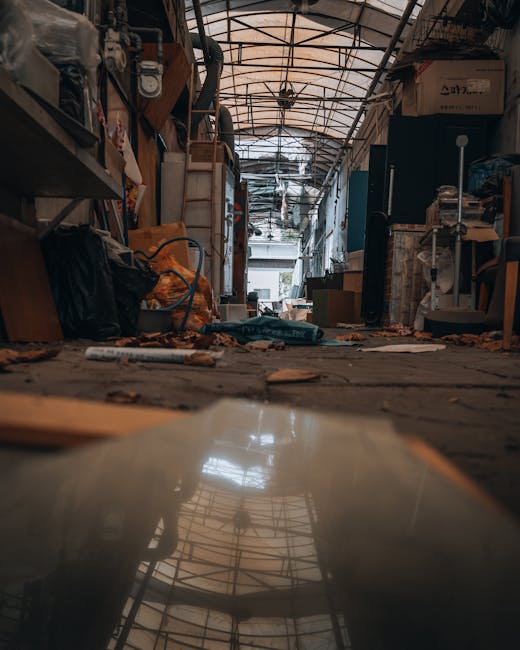
House Clearance in Chesham

House clearance in Chesham should be practical, orderly and suited to the property as it stands. We help with clearances for homes that are being emptied, reorganised or prepared for handover, and the work can be planned around the type of rooms, the volume of items and any access considerations. Whether the task involves a whole property or selected rooms, the aim is to remove the right items carefully and leave the space ready for its next use.
Our service is designed for people who want a straightforward way to deal with household contents without turning the process into a series of separate jobs. We can handle furniture, general household items and mixed loads that have built up over time. If there are pieces that need particular attention, such as bulky furniture or items stored in lofts and garages, those can be included in the same clearance plan. A clear scope at the start helps keep the work efficient and avoids confusion later.
If you are planning a house clearance in Chesham, it is often useful to list the main areas first, then decide what should stay and what should go. That simple approach helps when a property contains a mixture of everyday belongings, redundant furniture and stored items that are not in regular use. When you are ready, you can request a quotation and outline the rooms or items that need attention.
Full and partial home clearances
Some properties need a complete clearance, while others only need a focused service for a few rooms or a particular category of contents. We work with both approaches, which means the job can be tailored to a sale, a move, a tenancy change or a general reset of the home. A full clearance is often the simplest option when most contents need removing, but a partial clearance can be just as useful when only certain items are surplus to requirements.
Household clearances often involve mixed contents rather than one obvious type of item. That may include chairs, tables, wardrobes, drawers, boxes, loose household goods and items stored in corners or cupboards. We can separate the work into sensible sections so that reusable or wanted items are not treated the same as unwanted contents. If you are comparing options, the useful question is usually not whether the property is large or small, but which rooms and items actually need clearing.
How the work is usually planned
Planning normally starts with the main rooms and the most awkward items. If there are upstairs rooms, loft spaces or attached outbuildings, those can be considered at the same time so the clearance is organised in one visit rather than split into separate stages. Where there are items that need careful handling, it helps to identify them early so the work can be arranged in a suitable order and nothing important is removed by mistake.
Furniture, bulky items and room-by-room removal

Many house clearances are driven by furniture rather than small loose items. Sofas, beds, wardrobes, chests, dining sets and storage units can take up a large amount of space and often determine how long the work will take. We remove bulky household items as part of the wider clearance, which makes it easier to empty a room without moving the same pieces multiple times. This is particularly useful when furniture has to be taken from upper floors or from rooms with narrow access.
Room-by-room clearance is often the best way to deal with a property that still contains some wanted belongings. Each room can be approached with a simple sequence: identify what stays, remove what goes, then move to the next area. That approach is especially helpful in bedrooms, lounges and spare rooms where furniture, soft furnishings and stored items may all be mixed together. It also gives you a clearer picture of what remains in the property once the unwanted contents have been taken away.
Where suitable, we can also include furniture disposal within the same job. That is useful when individual pieces are no longer needed but do not require a separate visit. If the property contains several large items, it is often more efficient to clear them together than to deal with them one by one. You can also use our furniture clearance page if your main concern is the removal of larger household pieces rather than a wider home clearance.
Lofts, garages and storage areas
Lofts and garages can hold years of accumulated belongings, and these spaces often need a more methodical approach than the main rooms of the house. Access may be more limited, items may be stacked awkwardly, and contents are often mixed across many categories. We clear these areas as part of a home clearance or as a targeted job when the main house is not the issue. The practical aim is to remove what is no longer required without turning the process into an unnecessary disruption.
Garage clearance can involve tools, stored household items, broken furniture, boxes, shelving and other objects that have gradually filled the space. Loft clearance often requires more care because items may be stored in attics, roof spaces or boarded areas where movement is restricted. In both cases, it helps to decide whether the area needs a complete emptying or only a reduction in stored contents. If you want the space cleared as a standalone task, our garage clearance page is a relevant place to look.
These storage areas are often the most useful part of the property to clear first because they can influence how the rest of the home feels and functions. Once the hidden accumulation has been removed, it becomes easier to assess what is left elsewhere in the house. If a loft is involved, our loft clearance page may be helpful when you need a more focused service for that type of area.
Household contents, recycling and disposal choices

Not every item in a home clearance is the same, and the type of contents will affect the most suitable disposal route. Some household goods may be suitable for reuse, while others are better handled as mixed waste or separated material. We work in a way that allows the clearance to be organised sensibly rather than treating every object as identical. This is particularly important when a property contains a combination of furniture, fittings, storage items and general household contents.
Where items are no longer needed, the objective is to remove them efficiently and deal with them in a responsible way. That may involve sorting, separating and loading items for the appropriate disposal route. When a job includes a mixture of reusable and non-reusable contents, it is helpful to identify any items that should be left in place before the clearance begins. If you are dealing mainly with domestic contents, our home clearance page gives a wider view of that service.
Good preparation does not need to be complicated. A short list of the rooms involved, a note of the larger items and any access details is usually enough to begin. If there are items that should not be moved, keep them clearly separate. You can also use the recycling and sustainability page to understand more about how mixed household contents may be approached after collection.
When a house clearance is the right option
House clearance is often chosen when a property has reached the point where the contents need to be reduced quickly and sensibly. That may follow a move, a change in household arrangements or a decision to empty a property for practical reasons. It is not limited to a single type of home, and it can suit occupied homes, vacant properties and places that are partly in use but no longer need all their contents. The key point is that the work is shaped around the property’s present condition rather than a fixed template.
Some customers only need a single room emptied, while others need several floors dealt with in one visit. The service can be adjusted to that reality instead of forcing every job into the same pattern. If a property contains awkward furniture, boxed items or pieces stored in several places, it is usually more efficient to clear them together. For specific page information on the main service, our house clearance page may be useful.
When comparing options, it helps to think about access, volume and the mix of contents. Those three points usually shape the work more than the property description does. A compact terrace house with a full loft can take longer than a larger home with only a few items left inside, so it is better to describe the actual clearance requirement clearly than to rely on general assumptions. That makes the quotation process more accurate and helps the work run smoothly.
About Chesham
Chesham is a market town in Buckinghamshire, set in the Chess Valley within the Chiltern Hills. The town developed on the valley floor and along the routes that connect it to nearby settlements, and its layout still reflects that setting. Chesham’s historic core includes streets and buildings that show the town’s growth from an agricultural and market centre into a more varied residential place. The river Chess, a chalk stream known for its clear water and ecological value, runs through the valley and adds a strong natural character to the landscape. The surrounding Chiltern countryside is part of the reason the town feels closely tied to open land, wooded slopes and a distinct valley geography. The town centre contains a mix of independent shops, civic buildings and older street patterns, while the wider area includes housing that extends into the hills and out toward neighbouring communities. Chesham’s history also includes its place in the wider Buckinghamshire wool, leather and later manufacturing economy, with local change shaped by transport links and the arrival of the Metropolitan line, which connected the town more directly with London. That railway connection influenced commuting and growth during the twentieth century, yet Chesham has retained a recognisable local identity. Parks, recreation grounds and access to the Chilterns continue to be important parts of daily life, and the town’s setting makes walking routes and riverside areas especially notable. Taken together, these features give Chesham a character that combines a compact town centre, a strong valley landscape and a long-established place within the historic county.
Clearance for different property situations

Not every house clearance is the same, because properties are used in different ways and can contain different combinations of contents. A home that has been lived in continuously may need selective removal of older furniture and stored items, while a vacant property may need a more comprehensive emptying. The service can also suit homes that are being reorganised, where some rooms are being refreshed and others require a fuller clearance. That flexibility matters when the job is driven by what is present rather than by a fixed checklist.
In some cases, the most useful approach is to work through the property in stages. For example, the main living areas may be handled first, followed by bedrooms, then storage areas such as lofts or garages. In other cases, the whole property is best dealt with in a single clearance so the contents are removed efficiently from start to finish. If you need a more general domestic service, the home clearance page and the flat clearance page may help you compare the likely scope.
Flats and smaller homes often need careful attention to access, stairways and shared areas, whereas larger houses may require more time because of the number of rooms and stored items. Whatever the property type, the useful question is the same: which contents need to be removed, and what should remain in place? Answering that clearly makes it easier to arrange the right level of clearance and avoid unnecessary work.
Office-style contents and mixed waste from homes
Although this page is focused on houses, domestic clearances sometimes include items that look more like office contents than typical household goods. Desks, shelving, filing units and mixed paper items can appear in spare rooms, studies or converted spaces. When these items form part of the clearance, they can be included as part of the same overall job instead of being treated as a separate problem. That is especially useful when the property has become a hybrid of living space and storage.
Some homes also contain builders’ leftovers, broken fittings or other mixed material that does not fit neatly into one category. These can be removed alongside household contents where appropriate, provided the clearance is planned with the property’s layout in mind. For more details about waste-heavy jobs, our waste removal page and builders waste clearance page may be relevant if your clearance includes mixed non-household material.
When several types of contents appear together, the main practical point is to keep the work organised and avoid confusion over what is meant to stay. A short note on the key items, the rooms involved and any particularly awkward pieces is usually enough to set the job up properly. You do not need to overcomplicate it; a plain description is usually the most helpful.
Getting ready for a quotation
There are only a few pieces of information that normally make a quotation easier to prepare. The first is the type of property and the rooms involved; the second is whether the clearance is full or partial; the third is whether there are bulky items, storage areas or access issues that might affect the work. If you can also mention anything that should remain in the property, that helps keep the plan accurate and avoids misunderstandings.
If you prefer to think about the job in simple steps, use this order:
- identify the rooms or storage areas to be cleared;
- note any large or heavy items;
- separate anything that must stay;
- mention access points, stairs or narrow spaces;
- ask for a quotation based on the actual clearance required.
If you are ready to move on, contact us for a quotation and tell us what needs clearing. We can then look at the property’s layout and the type of contents involved, and prepare a response based on the work that is actually needed. For pricing-related information, you can also view pricing and quotes before making your enquiry.
Furniture disposal and related support
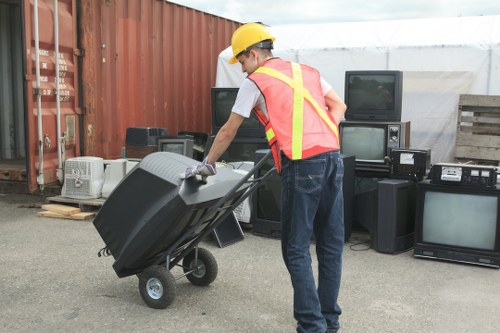
Furniture disposal is often part of a wider house clearance, especially when a property contains older items that are no longer needed. A single room may only require a few key pieces to be removed, while a full property can include several large items in different rooms. By dealing with the furniture as part of the overall clearance, it is easier to keep the job consistent and avoid leaving behind awkward items that prevent the room from being fully used again.
It is also common for household clearances to overlap with other services when different areas of a property need separate attention. A house with a loft full of stored belongings, a garage with mixed contents and a few large pieces of furniture in the living areas may benefit from more than one service page, but still be handled as one practical project. If your job leans more towards furniture alone, our furniture disposal page offers another relevant route.
When you are choosing how to proceed, think about the outcome you want from the room rather than the label on the service. Some customers want a property emptied throughout, others only want the bulky items removed, and some need a blend of both. Whatever the mix, the focus should stay on a clear, workable clearance plan and a sensible quotation request.