Chesham Bulky Rubbish Permits Buckinghamshire Council Rules: A Practical Guide for Residents and Landlords
If you are trying to make sense of Chesham Bulky Rubbish Permits Buckinghamshire Council Rules, you are probably dealing with one of those jobs that looks simple until it is suddenly not. A broken wardrobe, an old sofa, a mattress, a pile of builder's offcuts after a weekend project - all of it can raise the same question: do I need permission, a permit, or just the right disposal method?
Truth be told, most people do not want a lecture on waste regulation. They want a clear answer, fast, and preferably without three tabs open and a headache. This guide explains the practical side of bulky rubbish in Chesham, how council rules usually affect disposal, when a permit may be needed, what to check before you move anything to the kerb, and when using a professional clearance service can be the simpler route. It is written for real life, not for paperwork lovers.
For households, landlords, and businesses, the important thing is avoiding avoidable mistakes. A small slip - leaving waste out too early, blocking access, or disposing of the wrong material in the wrong way - can create delays, extra costs, or even a rejected collection. Let's get into it properly.
Table of Contents
- Why Chesham Bulky Rubbish Permits Buckinghamshire Council Rules Matters
- How Chesham Bulky Rubbish Permits Buckinghamshire Council Rules Works
- Key Benefits and Practical Advantages
- Who This Is For and When It Makes Sense
- Step-by-Step Guidance
- Expert Tips for Better Results
- Common Mistakes to Avoid
- Tools, Resources and Recommendations
- Law, Compliance, Standards, or Best Practice
- Options, Methods, or Comparison Table
- Case Study or Real-World Example
- Practical Checklist
- Conclusion
- Frequently Asked Questions
Why Chesham Bulky Rubbish Permits Buckinghamshire Council Rules Matters
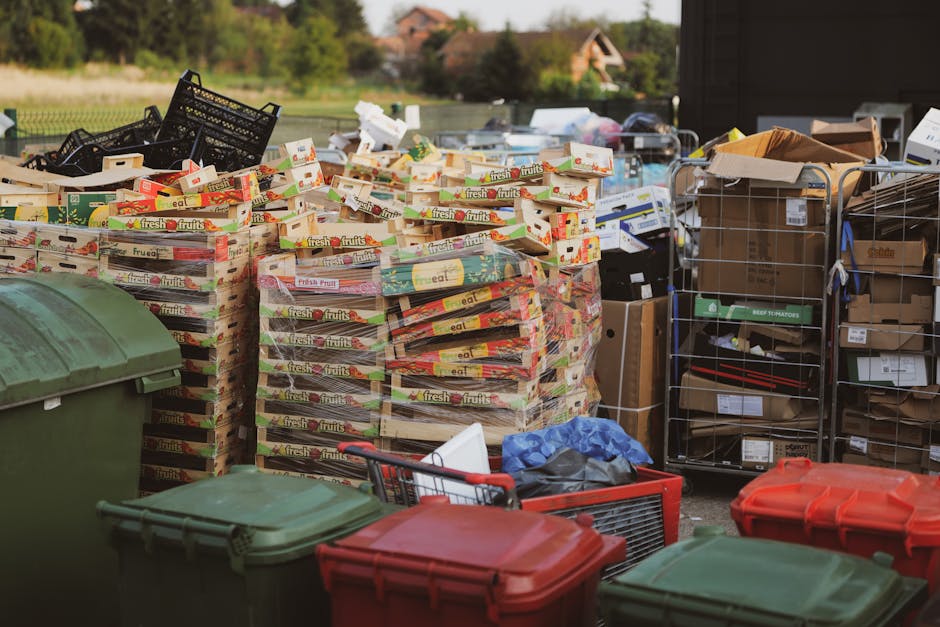
Bulky rubbish is rarely just "stuff". In practice, it is often waste that is awkward to move, difficult to sort, or too large for a normal bin collection. In Chesham, that matters because the way you present, store, and remove bulky items can affect whether they are accepted, whether they create a hazard, and whether you stay on the right side of local rules.
People usually look for a permit because they are doing one of three things: placing a skip on the public highway, arranging a larger waste move, or trying to understand what Buckinghamshire Council will and will not accept as part of a bulky waste collection. The exact answer depends on the type of waste and the method of removal, but the basic principle is simple: if waste is going onto shared public space, or could obstruct it, you need to be much more careful.
That is why this topic matters. It is not only about council admin. It is about safety, access, neighbour relations, and making sure you do not pay twice for a job that should have been planned once. A sofa left half on the pavement on a wet Tuesday morning can be more than untidy; it can be an obstruction. A fridge dumped without proper handling can become a safety problem. Small things, big consequences. Annoying, but true.
If you are dealing with a full property clearance rather than one or two items, it may help to think beyond permits and look at the wider service picture. For example, a planned house clearance or home clearance often avoids the stop-start hassle of moving bulky items piecemeal.
Key takeaway: If your bulky rubbish affects the pavement, road, shared access, or communal space, check the rules before you move it. If you are clearing items inside a property, you may not need a permit at all - but disposal still has to be lawful and sensible.
How Chesham Bulky Rubbish Permits Buckinghamshire Council Rules Works
The phrase can cover a few different situations, so it helps to separate them.
1. Council bulky waste collection
This is when the council arranges collection of larger household items such as furniture, mattresses, or appliances. The council's rules typically set out what can be collected, how many items are allowed, how items must be presented, and whether certain materials are excluded. If you miss the presentation rules, collection can be refused. That is one of those annoyingly mundane details that matters a lot.
2. Skip permits or highway permissions
If you place a skip, container, or similar waste receptacle on a public road or other highway land, a permit may be required. That is not the same thing as a bulky waste collection permit, and people often mix them up. A permit is usually about the location of the container, not the contents themselves. If the skip is fully on private land, the need for a permit may be different, but access, neighbour impact, and safety still matter.
3. Private bulky rubbish removal
This is where a clearance company removes the items directly from your property and transports them for sorting and disposal. In many cases, this is the simplest route if you want speed, flexibility, or help with awkward lifting. It is especially useful for mixed items, heavy furniture, loft contents, or hard-to-handle waste streams. Services such as furniture clearance and furniture disposal can be a practical fit when the main problem is bulky household items rather than a full property emptying.
That is the big picture. Council collection, highway permit, and private clearance are related, but they are not the same thing. Understanding which one you need saves a surprising amount of stress.
What you should check first
- Is the waste domestic, commercial, or construction-related?
- Will anything sit on a road, verge, pavement, or shared access route?
- Does the item include hazardous material, electrical components, or sharp edges?
- Is the collection being arranged by the council or a private contractor?
- Are there time limits, access restrictions, or parking concerns?
Key Benefits and Practical Advantages
When people get the rules right, they usually notice the benefits immediately. Not in a dramatic way. More in that quiet, relieved way when a job goes smoothly and nobody has to chase anyone.
Less risk of refusal or delay
If you understand the permit or collection requirements before moving anything, you reduce the chance of a no-show or a rejected collection. That matters if you are working around moving dates, tenancy changes, or a builders' timetable.
Safer streets and access
Bulky waste can create trip hazards and block paths. Following the right process helps keep the area safe for neighbours, pedestrians, visitors, and delivery drivers. It also reduces the chance of complaints, which can be awkward, let's face it.
Cleaner sorting and better recycling
Properly managed bulky rubbish is easier to sort into reusable, recyclable, and residual waste. A good operator or well-run clearance process will usually keep an eye on what can be separated. If sustainability matters to you, that is not a small thing.
More predictable costs
Costs can become messy when waste is not described clearly. Heavy items, restricted access, parking problems, or mixed materials may all affect the final price. Clear planning gives you a better chance of getting an accurate quote up front. If you want to compare options properly, a page like pricing and quotes can help you understand what to ask before booking.
Less strain on you
Carrying a wardrobe down narrow stairs is not everyone's idea of a good afternoon. To be fair, it should not be. A proper bulky rubbish plan reduces lifting, moving, and the number of times you and a mate have to say, "one more push".
Who This Is For and When It Makes Sense
This topic matters to more people than you might expect.
Homeowners
If you are clearing out a garage, replacing furniture, or getting rid of old items after a renovation, the rules determine whether you can use the council route or should book a private collection. A garage clearance is a common example, because garages tend to contain a little of everything: tools, broken chairs, paint tins, boxes, and mysterious cables nobody can identify.
Landlords and letting agents
End-of-tenancy clearances can involve bulky waste left behind by tenants, especially when furniture or large items are abandoned. If access is limited or timing is tight between tenancies, a structured plan is usually better than trying to rely on ad hoc disposal.
Families managing bereavement or downsizing
These jobs are often emotionally loaded. You are sorting through items that may have been in the home for years. In that situation, a calm, organised clearance approach is worth more than trying to do everything in one exhausting push. A broader flat clearance or house clearance approach may be more suitable than an item-by-item disposal plan.
Businesses
Offices, shops, and small commercial sites sometimes need bulky waste removal after a refit, relocation, or equipment refresh. Business waste should be handled as business waste, not assumed to follow the same route as household rubbish. That distinction matters more than people realise. If you are handling commercial premises, see business waste removal and office clearance for more context.
Builders and trades
Construction and refurbishment projects can create awkward mixed waste: timber, packaging, broken fixtures, plasterboard, and old fittings. These are not usually "bulky waste" in the domestic sense, and they may need a different disposal route. For that kind of work, builders waste clearance is often the more appropriate option.
Step-by-Step Guidance
If you want a clean, low-stress result, follow this sequence.
- Identify the waste clearly. List every item. Separate furniture, electricals, garden waste, builders' materials, and anything potentially hazardous.
- Decide where the waste will sit before collection. Private drive, front garden, communal area, road, pavement? This is where permit questions usually begin.
- Check whether the council collection route fits. For a small number of standard bulky household items, council collection may be enough. For mixed or larger loads, it often is not.
- Confirm access details. Narrow roads, parking restrictions, flats, stair access, and loading distance all affect the practical side. It sounds dull, but it is where jobs go wrong.
- Ask about exclusions. Mattresses, fridges, paint, chemicals, gas bottles, and certain electricals can have special handling requirements.
- Choose the disposal route. Use council collection, arrange a permit if needed, or book a private clearance service.
- Prepare the items. Make them accessible, dry where possible, and safe to handle. Remove loose contents and keep walkways clear.
- Document anything important. For landlords or businesses, a simple record of what was removed can save questions later.
A good rule of thumb? If you would not want to carry the item up two flights of stairs in the rain, plan it properly. That is not a legal test, obviously. Just a very human one.
Simple preparation checklist before collection
- Break down furniture where safe to do so
- Remove drawers, shelves, and loose contents
- Bag smaller loose waste separately
- Keep paths and doors clear
- Check for sharp edges, nails, or broken glass
- Make sure the load does not block neighbours or emergency access
Expert Tips for Better Results
Most bulky rubbish problems are easier to solve with better planning than with brute force. A few sensible habits make the whole process smoother.
Tip 1: Group waste by type before asking for help
If you can say, "I have three pieces of furniture, a washing machine, and some bagged general waste," you will usually get a more accurate response than if you say, "It's a bit of everything." That second one is where quotes start to wobble.
Tip 2: Measure the awkward bits
Door widths, stair turns, lift dimensions, and alley access can all matter. A wardrobe may be simple in theory and impossible in reality. Measure first, curse less later.
Tip 3: Think about parking early
In parts of Chesham, parking is not exactly generous at the best of times. If a vehicle needs access close to the property, plan that early. It can save time and prevent the "we had to park half a street away" conversation.
Tip 4: Keep hazardous items separate
Do not mix unknown chemicals, paint, batteries, or damaged electricals with ordinary bulky waste. Separation helps with safe handling and disposal decisions. It also makes the collection easier to assess.
Tip 5: Ask what happens after collection
You do not need a dissertation, but you should ask whether items will be reused, recycled, or disposed of. A company with a clear recycling and sustainability approach is usually more transparent about what happens next.
Tip 6: Don't leave it until the last minute
That is especially true if you are moving out, handling a probate property, or trying to clear a property before new tenants arrive. A day's delay can become a week's delay, and then suddenly everyone is irritated. Not ideal.
Common Mistakes to Avoid
These are the ones that tend to cause trouble again and again.
- Assuming a permit is never needed. If waste or a container touches public land, check first.
- Mixing domestic and commercial waste. Rules and handling can differ.
- Leaving items out too early. Council collections often have presentation windows. Miss them and you may lose the slot.
- Ignoring weight and access issues. A "small" job can still be a hard job if the access is awkward.
- Forgetting about communal rules. Flats, shared entrances, and managed estates may have extra conditions.
- Underestimating hidden waste. Cupboards, loft spaces, and garages often contain more than they first appear to.
- Disposing of restricted items with general waste. That can be a compliance problem, not just an inconvenience.
One of the most common mistakes is simply not reading the waste pile properly. You look at it once and think, "easy." Then the weather changes, the lift breaks, and half the load turns out to be heavier than expected. Happens all the time.
Tools, Resources and Recommendations
You do not need specialist equipment for every bulky rubbish job, but a few basic tools help a lot.
Useful practical tools
- Measuring tape: for doors, stairwells, and item dimensions
- Work gloves: for handling splintered wood, staples, and rough edges
- Heavy-duty bags: for smaller loose waste and mixed light items
- Marker labels: useful when sorting items for reuse, recycling, or disposal
- Phone photos: helpful when requesting a quote or confirming access
Useful service pages for related needs
If you are dealing with a wider property emptying rather than just one awkward item, you may find it useful to look at loft clearance, furniture clearance, or general waste removal. These services are often a better fit when the job includes more than one type of waste stream.
If the job is happening in a house with outbuildings, it can also help to plan for garden clearance or garage clearance at the same time. Consolidating the work is not always cheaper, but it is often less disruptive.
When to ask for a quote rather than guessing
Ask for a quote when the load is mixed, access is difficult, or you are unsure how much will actually be removed. A good quote process should feel calm and practical, not pushy. If you want to make an informed decision, the page on pricing and quotes is a helpful place to start.
Law, Compliance, Standards, or Best Practice
Waste handling in the UK is not something to treat casually. Even when you are only dealing with domestic bulky rubbish, there are still expectations around safe storage, lawful disposal, and responsible transfer. If you use a contractor, you should be confident they can handle the work appropriately and explain the process clearly.
In plain English, good practice usually means:
- keeping waste out of public access routes unless properly arranged
- separating items that need different treatment
- avoiding unsafe lifting and handling
- not leaving waste where it could cause nuisance or obstruction
- using a service that is clear about disposal and safety
For landlords and businesses, the bar is a little higher. You are not only thinking about convenience. You are also thinking about duty of care, property condition, and avoiding complaints from neighbours or occupants. If staff, contractors, or the public could be affected, safety planning matters a great deal.
That is why pages like health and safety policy, insurance and safety, and about us can be useful when you are checking whether a provider is organised and accountable. You are not being fussy. You are being sensible.
Practical compliance note: If you are unsure whether your items count as bulky household waste, mixed rubbish, or something that needs special handling, do not guess. Get clarification before collection. A short conversation is better than a rejected load.
Options, Methods, or Comparison Table
There is no one-size-fits-all answer here. The right method depends on what you are removing, how quickly you need it gone, and whether the waste touches public land.
| Option | Best for | Pros | Watch outs |
|---|---|---|---|
| Council bulky waste collection | Small numbers of standard household bulky items | Simple for basic domestic clearances | Item limits, collection rules, and restricted materials may apply |
| Skip with permit | Projects with a fixed volume of mixed waste | Good for ongoing work and renovation waste | Permit may be needed if placed on public land; filling it correctly takes planning |
| Private clearance service | Mixed, heavy, awkward, or time-sensitive clearances | Faster, more flexible, less lifting for you | Costs depend on access, load size, and waste type |
| Self-haul to a disposal site | Smaller loads where you have suitable transport | Can work well for simple jobs | Time, vehicle capacity, and sorting requirements can make it inconvenient |
In a lot of Chesham homes, the private clearance route ends up being the most practical. Not because it is always the cheapest on paper, but because it reduces the number of moving parts. Fewer moving parts, fewer headaches.
Case Study or Real-World Example
Imagine a typical Chesham terrace property after a long-overdue clear-out. There is a sofa in the front room, an old wardrobe in the bedroom, a broken chest of drawers in the loft, and several bags of mixed bits and pieces in the garage. The owner initially thinks about putting everything out for the council collection.
Then the practical issues appear. The sofa is too large to move down the staircase safely without help. The wardrobe needs dismantling. The garage waste includes mixed items that may not suit a standard bulky collection. And the front of the house does not offer much space to leave everything outside without blocking access.
So the plan changes. The owner groups the items by type, takes a few photos, checks access, and arranges a private clearance. The bulky items are taken directly from inside the property, the mixed waste is separated properly, and the job is completed in one visit. No arguments with neighbours, no last-minute scramble, and no sofa balancing act on the pavement at 7 a.m.
That is a common outcome, honestly. Once the job is broken down properly, the "massive mess" often becomes a manageable sequence of smaller tasks.
Practical Checklist
Use this before arranging any bulky rubbish removal in Chesham.
- Have I identified every item that needs removing?
- Do any items need special handling, such as electricals or hazardous materials?
- Will anything be placed on public land or a shared access area?
- Do I need a council collection, a permit, or a private service?
- Have I checked access, parking, and stair or lift restrictions?
- Have I separated recyclable items from general waste where possible?
- Are the items safe to lift and move?
- Do I know the collection window or arrival time?
- Have I asked for a quote if the load is mixed or unclear?
- Have I checked the provider's safety, insurance, and disposal approach?
If you can tick most of those off, you are in a much better position. Not perfect perhaps, but properly prepared. That counts for a lot.
Conclusion
Chesham Bulky Rubbish Permits Buckinghamshire Council Rules can sound more complicated than they really are. Once you separate council collections, highway permits, and private clearance options, the picture becomes much clearer. The main thing is to match the method to the waste, the access, and the location.
For a small household item or two, a council route may be enough. For larger, mixed, awkward, or time-sensitive jobs, a direct clearance service is often the cleaner choice. Either way, the best results come from a bit of planning, a clear description of the load, and a sensible eye on safety. That is the boring truth, and also the useful one.
When you handle bulky rubbish properly, the whole place feels lighter. Rooms open up. Paths clear. The day just moves better. And that, more than anything, is what most people want.
Get a free quote today and see how much you can save.
If you want to learn more about the company behind these services, you can also read about the team on the about us page or get in touch through the contact us page when you are ready.
Frequently Asked Questions
Do I need a permit for bulky rubbish in Chesham?
Not always. It depends on what you are doing. If waste is being removed from private property without using public land, a permit may not be needed. If a skip, container, or waste pile will sit on a road, pavement, or other public space, you may need permission or a permit depending on the arrangement.
What counts as bulky rubbish?
Usually it means large household items that are awkward to move in a normal bin, such as sofas, wardrobes, mattresses, tables, and large appliances. The exact treatment depends on the item type and how it is being collected.
Can I leave bulky waste on the pavement for council collection?
Only if the collection instructions allow it and only in the required way. Leaving items out too early or in the wrong place can lead to refusal, complaints, or safety problems. It is best to check the collection rules first.
Is a skip permit the same as a bulky waste permit?
No. A skip permit is generally about placing a skip or container on public highway land. Bulky waste collection rules are about how items are accepted and collected. People often mix the two up, which is fair enough, but they are different things.
What should I do with furniture I no longer want?
You can arrange council collection if eligible, book a private furniture collection, donate suitable items, or use a clearance service. If the item is large, damaged, or difficult to carry, a managed furniture removal route is often the easiest solution.
Can businesses use the same bulky waste process as households?
Not usually. Business waste is often treated differently from domestic waste. Offices, shops, and commercial premises should check business-specific disposal options and make sure items are handled under the right process.
How do I know whether my waste is too mixed for council collection?
If the load includes a variety of materials - furniture, electricals, bagged waste, building debris, and odd loose items - it may be too mixed for a simple bulky collection. In that case, a private clearance or waste removal service is often more suitable.
What happens if bulky items block access or cause a hazard?
They can create trip risks, obstruct neighbours, and slow down collection. In some cases, collections may be refused or reported. Keeping paths, entrances, and shared spaces clear is always the safer option.
Are electrical items treated differently from furniture?
Yes, often they are. Electrical items can need separate handling because of wiring, refrigerants, batteries, or other components. A fridge, TV, or washing machine may not be treated the same as an ordinary chair or wardrobe.
How can I keep bulky rubbish costs down?
Sort items clearly, give accurate descriptions, measure awkward pieces, and make access as easy as possible. The less confusion there is, the more likely you are to get a realistic quote. Consolidating related jobs can help too.
Should I use a clearance company or arrange everything myself?
If the load is small, simple, and easy to transport, doing it yourself may work. If the items are heavy, mixed, difficult to move, or time-sensitive, a clearance service is often better value once you factor in your time, vehicle costs, and effort.
What is the best first step if I am unsure about the rules?
Make a list of the items, note where they will be placed, and check whether the collection is domestic, commercial, or construction-related. If it still feels unclear, ask for a quote or speak to a clearance provider who can assess the job properly. Small bit of effort now, much less hassle later.
And that is really the heart of it: sensible planning, clear categories, and the right route for the waste you have. If you handle those three things well, the rest usually falls into place.